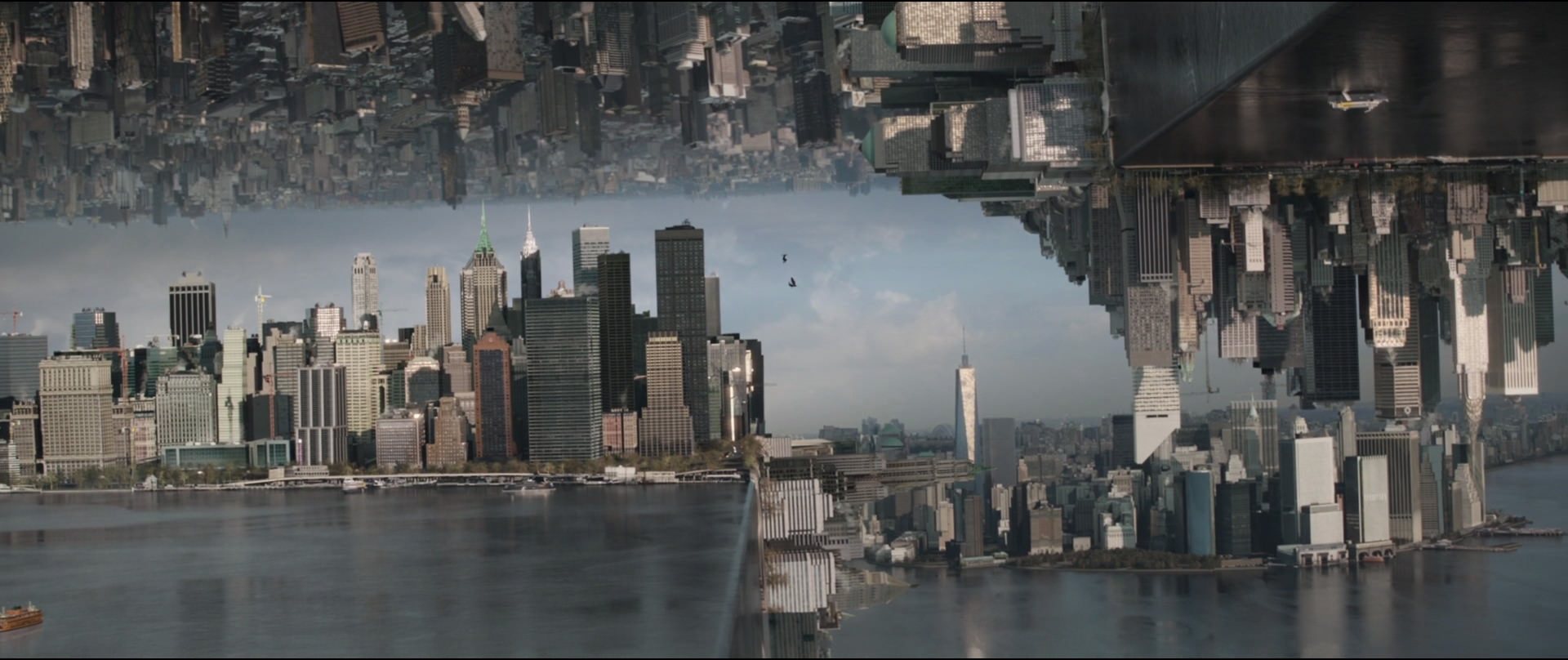
Welcome to my MCU Rewatch, where I write an analysis of the MCU movies in the order of theatrical release. In this installment, I talk about the lack of typical tropes in The Hero’s Journey and how that detracts from Doctor Strange’s character.
Release Date: 4 November 2016
Distributor: Disney/Marvel
Director: Scott Derrickson
There is a trope that I love, and it involves that dorky, intellectual who no one believes in that has to overcome every obstacle in order to be The Best or The King or Whatever Title The Prologue Laid Out. Throughout his journey, there is only one person who believes in him. Either his mentor, who inevitably dies, or himself after the mentor’s death and a couple hard lessons.
You see this trope everywhere because I just described the protagonist for The Hero’s Journey. Doctor Strange the movie wants to apply this trope to Dr. Stephen Strange, the character, but misses the mark in a couple ways.
**NOTE ** Referral to the movie title will be Doctor Strange (title spelled out, italicized) while referral to the character will simply be Strange (just the name, no italics).

Doctor Strange Lacks Endearment
What makes the Hero in The Hero’s Journey so likable is an endearing quality (or two) that the audience can relate to. Until Strange gets to Kamar-Taj, he does not show any endearing qualities by being a straight-up ass. He humiliates a colleague in front of a full ER and is distracted by silly games in the middle of neurosurgery (SURGERY ON SOMEONE’S SACK OF SENTIENCE! He’s arguing with his colleague about the release of a song while cutting into the muscle that makes a person a person).
I couldn’t help but compare him to Tony Stark (Robert Downey Jr.) who is also an established ass with dark hair and a goatee. The thing that separates Tony’s ass-ness and Strange’s is that Tony Stark has a heart. Even before he befriends Yinsen (Shaun Toub) as a prisoner of war, Tony bonds with the soldiers in the “Fun-Vee.” Tony spent the formative years of his life continuing his father’s legacy of war mongering, but he is ultimately a good guy; that’s what makes him so endearing to the audience.
Strange lacks that core sense of motivation. He wants to heal his hands so he can go back to being a brilliant neurosurgeon, but why neurosurgery in particular? WHY does he want to save lives? WHAT does he get from a hospital environment that he doesn’t get from academia or hospital management?
Those questions are not answered, but we see glimpses of his potential as a character later in the movie. In the sparring fields of Kamar-Taj, he struggles with the physicality of sorcery and martial arts. After Strange defends the New York Sanctum, he expresses distraught feelings over intentionally killing a man. The narrative plays up his intelligence and curiosity, particularly so when he doesn’t full-on reject the Mystic Arts. What we don’t see is his hesitancy at being a warrior.

That hesitancy is important, because everyone else at the Kamar-Taj is warrior-like in some capacity. Defenders against the darkness have to know how to fight the darkness, after all. But Strange isn’t here to defend the Earth from the dark dimension. He’s here to heal himself before he’s here to learn.
That conflict of interest is something that the narrative should have brought forward a bit more. We caught glimpses of it, but it wasn’t a crux in the story. It would have made Strange’s use of trickery to defeat the god of the dark dimension that much more relevant. Instead of approaching the dark dimension as a warrior, he approaches as an intellect and a trickster. And THAT is the value of Strange.
Cultural Appropriation as Diversity
Kamar-Taj and the Sorcerer’s Sanctum draw heavy architectural and design influences from Eastern and Southern Asia. The Kamar-Taj is accessed through a random door in Kathmandu, the capital of Nepal, and the majority of the clothing and people in the background are of Asian descent.
That being said, with the exception of Wong (Benedict Wong), all the main characters are not Asian. If the director wanted the world to seem diverse, that Kamar-Taj accepts students from all over the globe, then the majority of the background characters would be a mixture of genders and colors and cultural identities.

That is not what we got. What we got was a white woman playing the part of The Ancient One (Tilda Swinton), who oversees the Kamar-Taj and the overall protection of Earth from the dark dimension. That role was whitewashed. I do not mean to take away from Swinton’s performance, because she was very good in the role. But her being cast in the role reads as racist, at the very least erasure, and that I take issue with.
The same goes for the casting of the rest of the film. The main players of Steven Strange, Kaecilius (Mads Mikkelsen) and The Ancient One are all played by white people. Wouldn’t it have been cool if Strange were played by someone like David Patel? Can you imagine Lucy Liu as The Ancient One?
I can see that Marvel is trying to diversify it’s giant comic-book-as-movie world. Nick Fury is played by Samuel L. Jackson and it’s great to see a black man be the leader in world intelligence. His right-hand-man is Maria Hill (Cobie Smoulders), a woman. And yet (and yet!) not one but TWO superheroes have a Black Best Friend, neither of whom get their own movie. It takes 18 movies for a non-white title character (Black Panther), 20/21 movies before a woman gets her name in the title (Ant-Man and the Wasp and Captain Marvel were released approximately the same time). If diversity was an important issue for the Marvel Cinematic Universe, they would have done a better job earlier than Phase 3.
Tune in next time for the endearing adventures of Guardians of the Galaxy 2.

Random Thoughts on Doctor Strange:
- Steven Strange’s favorite accessory is a watch, and he gets to mystically play with time and become the keeper of the time stone. It’s relevant, y’all!
- All the Sorcerer Sanctums are in the northern hemisphere. Which means the dark dimension should try coming into our world through the south pole. Problem solved.
- If there was to be a Sorcerer’s Sanctum in the south pole, where would it be? Sydney, Australia? Cape Town, South Africa? Christchurch, New Zealand?
- Let it be said that Doctor Strange is the real introduction to the multi-verse. We may get more of the multi-verse’s function in later iterations of the MCU, but Doctor Strange introduced the concept of multiple timelines and dimensions.
- There are a whole lot of infinity stone colors in the dark dimension. Just pointing that out there. Seems relevant.
Leave a Reply